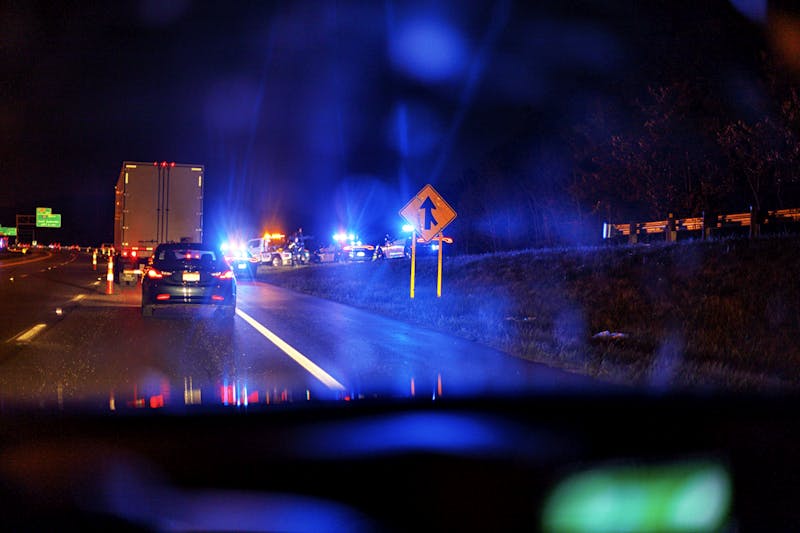
Nighttime driving brings a unique set of dangers, especially when large commercial trucks share the road. One of the most devastating types of crashes is the T-bone accident, where the front of one vehicle strikes the side of another. These collisions are particularly severe when visibility is reduced, and the impact involves a truck weighing tens of thousands of pounds.
At McCraw Law Group, we have represented countless Texans injured in nighttime T-bone crashes. We have seen how limited lighting, fatigue, and poor visibility combine with driver negligence to create catastrophic consequences. Understanding how and why these accidents happen is key to prevention, recovery, and accountability.
Why Visibility Is a Key Factor in Nighttime Accidents
Roughly half of all fatal crashes occur at night, even though far fewer drivers are on the road. Reduced visibility affects reaction times, perception, and decision-making for all motorists, but the risks multiply when trucks are involved.
Key factors that reduce visibility at night include:
- Limited street lighting, especially on rural roads and intersections
- Glare from oncoming headlights
- Dim or defective headlights or taillights
- Weather conditions such as fog or rain that reflect and diffuse light
- Difficulty judging distance and speed in low light
When a truck driver or another motorist fails to see an approaching vehicle at an intersection, the result can be a high-speed side impact that causes devastating injuries.
How T-Bone Accidents Happen at Night
T-bone collisions often occur at intersections where one driver fails to yield or runs a traffic signal. At night, visibility issues make these scenarios far more dangerous. Common causes include:
- Drivers running red lights or stop signs because signals were obscured or misjudged
- Poorly lit intersections where side traffic is difficult to see
- Trucks turning left or crossing highways without seeing oncoming vehicles
- Distracted or fatigued driving that delays reaction time
- Speeding through intersections with limited lighting
Even a split-second lapse in judgment can cause a violent collision when visibility is low.
Why T-Bone Accidents with Trucks Are So Devastating
When a truck collides with the side of a car, the occupants of the smaller vehicle face enormous impact forces. Unlike frontal or rear-end collisions, side impacts offer little structural protection between the victim and the point of collision.
Common injuries in nighttime T-bone truck accidents include:
- Traumatic brain injuries and concussions
- Spinal cord injuries and paralysis
- Broken ribs and crushed chest injuries
- Internal bleeding or organ damage
- Fractured hips, pelvis, or limbs
- Fatal injuries due to intrusion into the passenger compartment
In addition to physical trauma, victims often experience lasting emotional distress, especially when the crash occurs suddenly and in near darkness.
Visibility Challenges Unique to Trucks
Trucks present additional visibility challenges that make nighttime T-bone accidents more likely. These include:
- Large blind spots on both sides of the cab and directly behind the trailer
- Dim or dirty side-marker lights that fail to alert other drivers to a truck’s presence
- Long trailers that block the cross-traffic’s view at intersections
- Poorly maintained reflective tape or missing lights that make trucks nearly invisible in low light
- Even small oversights in vehicle maintenance or lighting can lead to catastrophic results when combined with darkness and high speeds.
The Role of Negligence in Nighttime Truck Accidents
Truck drivers and trucking companies have a legal duty to operate safely at all hours. Failing to adjust for low visibility or neglecting proper maintenance can amount to negligence. Common examples include:
- Driving too fast for nighttime or weather conditions
- Failing to inspect and repair defective headlights, taillights, or reflectors
- Ignoring fatigue management requirements that reduce alertness at night
- Making unsafe turns or failing to yield at intersections
- Neglecting to use proper reflective materials or trailer lighting
When these failures lead to an accident, victims have the right to pursue compensation for their injuries and losses.
Proving Fault in a Nighttime T-Bone Truck Accident
Determining fault in these cases often requires detailed investigation and expert analysis. Our attorneys use multiple forms of evidence to build strong claims:
- Traffic camera or surveillance footage that captures the intersection and lighting conditions
- Black box data showing the truck’s speed and braking behavior
- Maintenance and inspection records proving poor upkeep of lights or reflectors
- Witness statements that describe lighting and driver actions
- Accident reconstruction experts who analyze sightlines and visibility
At McCraw Law Group, we gather every available piece of evidence to show exactly how visibility and negligence combined to cause a client’s injuries.
Shine a Light on the Truth After a Nighttime Truck Accident
Darkness should never hide accountability. If you or a loved one has been injured in a T-bone truck accident at night, you deserve answers and justice. Visibility issues do not excuse negligence, and every victim has the right to be heard.
Contact McCraw Law Group today for a free consultation. We will investigate the circumstances, identify all responsible parties, and fight for the compensation you need to rebuild your life. Together, we can shine a light on the truth and make Texas roads safer for everyone.