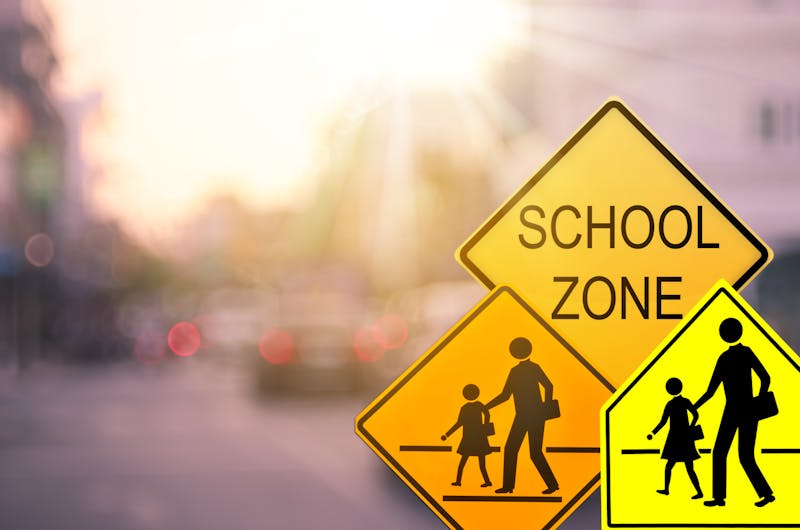
As students return to school each year, Texas roads become noticeably busier during morning drop-off and afternoon pickup times. School zones are designed to protect children, but accidents still happen far too often when drivers fail to slow down, become distracted, or ignore traffic laws.
Because children are among the most vulnerable pedestrians, even a low-speed collision can result in serious injuries. Understanding the risks associated with school zones can help drivers make safer decisions and help parents know what steps to take if an accident occurs.
Why School Zones Require Extra Caution
School zones exist because children do not always react to traffic the way adults do. Younger children may be difficult to see, may enter roadways unexpectedly, or may not fully understand traffic patterns.
During busy school hours, drivers must contend with:
- Increased pedestrian traffic
- School buses are making frequent stops
- Parents entering and exiting pickup lines
- Crossing guards directing traffic
- Congested intersections and parking areas
Even a brief lapse in attention can have serious consequences when so many children are present.
Common Causes of School Zone Accidents
Many school zone accidents are entirely preventable. Some of the most common causes include:
Speeding
Reduced speed limits are enforced in school zones for a reason. Driving even a few miles per hour above the posted limit can significantly increase stopping distance and reduce a Driver's ability to react to unexpected situations.
Distracted Driving
Looking at a phone, adjusting a navigation system, or focusing on something inside the vehicle can take a driver's attention away from the road at the exact moment a child enters a crosswalk or roadway.
Failure to Yield
Drivers may fail to yield to pedestrians, crossing guards, or vehicles with the right of way. These mistakes can lead to collisions involving children, parents, bicyclists, or other motorists.
Illegal Passing of School Buses
Texas law requires drivers to stop for school buses loading or unloading children when the bus displays flashing red lights and an extended stop arm. Failing to stop puts children at risk during one of the most dangerous parts of their school day.
Injuries Commonly Seen in School Zone Accidents
Because many school zone accidents involve pedestrians or bicyclists, injuries can be severe even at relatively low speeds.
Common injuries include:
Children may not always recognize or communicate their symptoms immediately. For that reason, a medical evaluation is important whenever a child is involved in a collision.
What Parents Should Do After a School Zone Accident
If your child is involved in a school zone accident, taking the right steps can help protect both their health and any potential legal claim.
Seek Medical Attention
Even if injuries appear minor, a medical evaluation can help identify conditions that may not be immediately obvious.
Document What Happened
If possible, gather photographs of the accident scene, vehicle damage, traffic signs, and any visible injuries. Obtain contact information from witnesses and request a copy of any police report.
Keep Medical Records
Save medical bills, treatment records, prescriptions, and any documentation related to your child's recovery.
Avoid Speaking with Insurance Companies Without Preparation
Insurance adjusters may contact families shortly after an accident. Before providing recorded statements or accepting any settlement offer, it is often beneficial to fully understand the extent of the injuries and damages involved.
Who May Be Liable for a School Zone Accident?
Liability depends on the specific circumstances of the crash.
Potentially responsible parties may include:
- Negligent drivers
- Commercial vehicle operators
- School bus drivers
- Government entities responsible for roadway maintenance
- Other parties whose actions contributed to the accident
Determining liability often requires reviewing witness statements, police reports, traffic camera footage, and other evidence.
Protecting Children Starts with Safer Driving
School zones are among the most important areas where drivers must remain alert and exercise patience. A few extra moments spent slowing down, eliminating distractions, and following traffic laws can help prevent life-changing injuries.
When a school zone accident does occur, understanding your legal rights and options can be an important part of protecting your family's future.
If your child has been injured in a Texas school zone accident, McCraw Law Group can help you understand your options and pursue the compensation your family may be entitled to recover.
Contact us today for a free consultation.