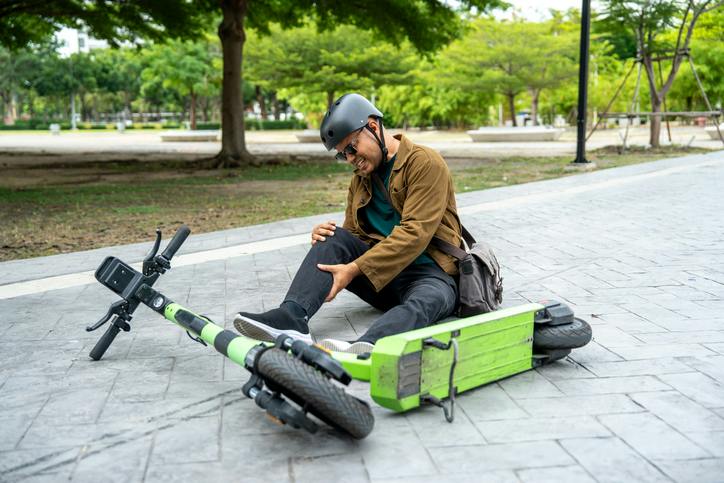
Texas law separates electric micromobility devices into two categories, and each carries its own rules. Under Transportation Code Chapter 664, an electric bicycle is a bicycle with fully operable pedals and a motor of up to 750 watts, divided into Classes 1, 2, and 3 depending on how the motor assists the rider and its top assisted speed. Stand-up e-scooters fall under the "motor-assisted scooter" definition in Transportation Code Section 551.351 and generally follow the same rules of the road as bicycles.

Common Injuries, Causes, and Locations of E-Bike and Scooter Accidents
Riders and pedestrians involved in e-bike or e-scooter crashes commonly experience:
- Traumatic brain injuries and concussions
- Skull fractures and other head or facial injuries
- Fractures to the wrist, forearm, or shoulder
- Road rash and deep lacerations
- Spinal cord and neck injuries
These injuries usually trace back to a handful of recurring causes:
- Distracted or inattentive drivers failing to see a rider
- Drivers failing to yield at intersections or driveways
- Poorly maintained roads, sidewalks, or bike paths
- Mechanical defects in the e-bike or scooter itself
- Riding at night without adequate lights or reflectors
- Inexperienced or unsupervised child riders on adult-class devices
Crashes tend to cluster in a few predictable settings as well, including:
- Sidewalks and crosswalks
- Marked bike lanes
- Busy intersections
- School zones during arrival and dismissal
- Private roads within apartment or condo complexes