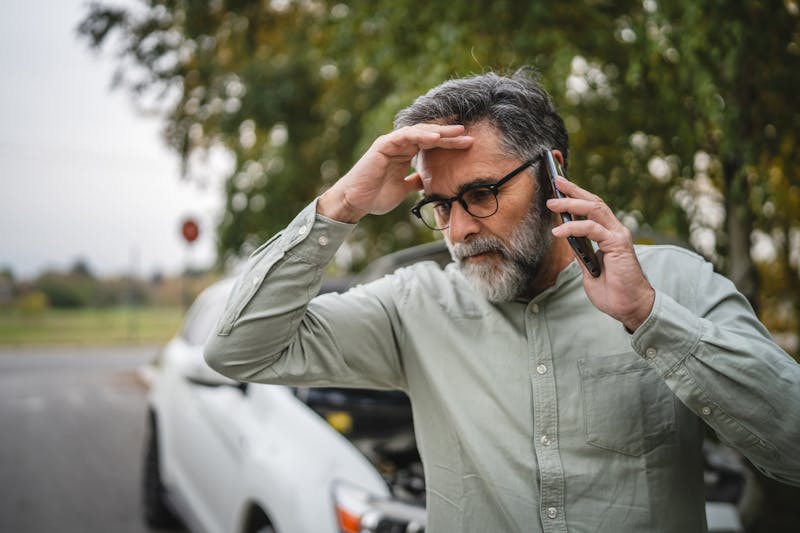
Thanksgiving weekend is one of the busiest times of the year on Texas roads. Highways fill up on Wednesday afternoon and stay packed through Sunday as families head out to see relatives and then make the trip home. With that much traffic, one driver hitting the brakes too hard can lead to a crash involving three, four, or even more cars.
When several vehicles are involved, figuring out who is responsible gets complicated quickly. More than one driver may share the blame, and each insurance company has a reason to point the finger at someone else. Here is how fault is sorted out in these cases and what you can do to protect your claim.
Why These Crashes Happen Over the Holiday
A multi-vehicle accident, often called a chain-reaction crash or pileup, usually starts with a single collision. A driver stops suddenly, the car behind them can't stop in time, and the vehicles further back get pulled in before anyone has a chance to react.
Holiday traffic creates the perfect setup for this. Stop-and-go conditions on major routes like I-35, I-45, and I-10 mean drivers are constantly braking, and long drives leave people tired and impatient. The most common causes of these crashes include:
-
Following too closely
-
Distracted driving, including phones and GPS
-
Speeding or driving too fast for traffic
-
Drowsy driving after long trips or late nights
-
Drunk driving, which tends to rise over holiday weekends
-
Unsafe lane changes
Weather can add to the risk. Rain or fog in parts of Texas in late November cuts down visibility and makes roads slick, leaving drivers even less room for error.
Who Is at Fault in a Chain-Reaction Crash?
Many people assume the driver at the back of the line is automatically to blame. Sometimes that's true, but not always. A driver who cut across lanes and slammed on the brakes may have started the whole thing. In other crashes, two or three drivers each made a mistake, like following too closely or looking down at a phone, that played a part in what happened.
Because several impacts can happen within a few seconds, the order of events isn't always clear, even to the people who were there. That is why evidence matters so much.
Evidence Used to Prove Liability
Fault in a multi-vehicle accident is usually pieced together from several sources:
-
Police reports. Officers note where each vehicle ended up, the road conditions, and what drivers and witnesses said at the scene. The report isn't the final word on fault, but it is often the starting point.
-
Photos and video. Pictures of the damage, skid marks, and debris help show how the cars made contact. Dash cam footage, traffic cameras, and security cameras at nearby businesses may capture the crash itself. Business footage is often recorded over within days, so it needs to be requested quickly.
-
Witnesses. People who weren't involved in the crash can describe who was speeding, who changed lanes, or who stopped short.
-
Vehicle data. Many newer cars have an event data recorder, or “black box,” that stores speed, braking, and steering information from the seconds before a crash.
-
Accident reconstruction. In serious cases, reconstruction experts use the vehicle damage, impact angles, and vehicle data to work out the sequence of collisions.
How Texas Law Divides Fault
Texas uses a modified comparative fault rule, sometimes called the 51% bar rule. Each driver involved in a crash can be assigned a percentage of responsibility. If you are found 50% or less at fault, you can still recover damages, but your award is reduced by your share of the blame. For example, if your damages total $100,000 and you are found 20% at fault, you could recover $80,000. If you are found 51% or more at fault, you cannot recover anything.
That is why insurance companies in multi-vehicle cases often try to shift more of the blame onto you. A few percentage points can make a real difference in what you receive.
What to Do After a Multi-Vehicle Accident
If you are involved in a chain-reaction crash over Thanksgiving weekend, these steps can help protect your health and your claim:
-
Call 911 so police come to the scene and file a report.
-
See a doctor right away, even if you feel fine. Some injuries don't show up for hours or days.
-
If it is safe, take photos of every vehicle involved, the road, and the surrounding area.
-
Get names, phone numbers, and insurance information from all of the drivers, along with contact information for any witnesses.
-
Don't apologize or talk about who caused the crash.
-
Report the accident to your insurance company, but be careful about giving recorded statements to other drivers' insurers before speaking with a lawyer.
How McCraw Law Group Can Help
With multiple drivers and multiple insurance companies involved, these claims take more work than a typical car accident case. Our attorneys can investigate the crash on your behalf, gather police reports, video, and vehicle data before it disappears, bring in reconstruction experts when needed, and handle communication with every insurance company. Our goal is to make sure fault is assigned fairly and that you are compensated for your medical bills, lost wages, pain and suffering, and other losses.
If you or someone you love was hurt in a crash over Thanksgiving weekend, we're here to help.
Contact McCraw Law Group today for a free consultation and learn how we can help you move forward after a Texas multi-vehicle car accident.